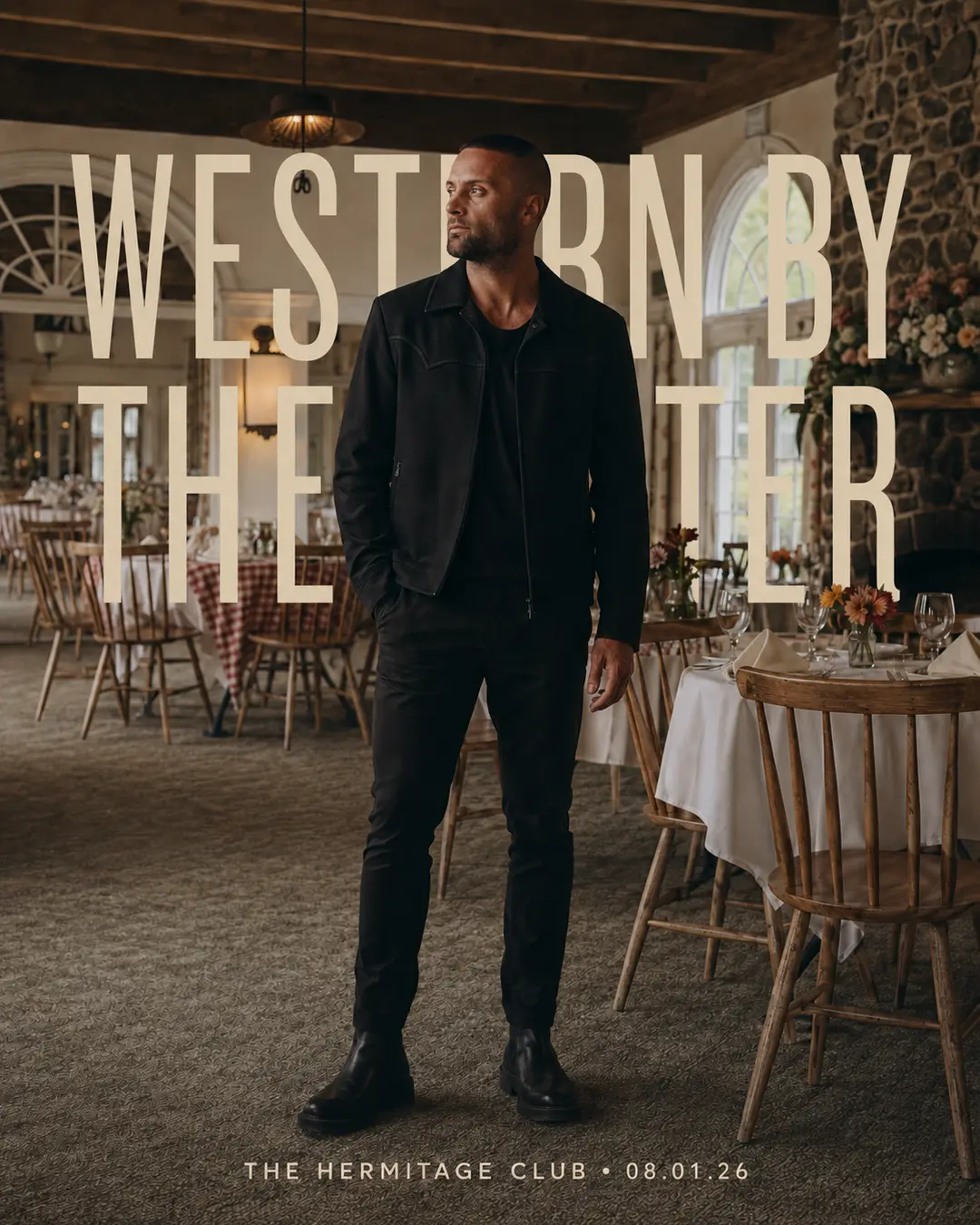
Western, without becoming a costume
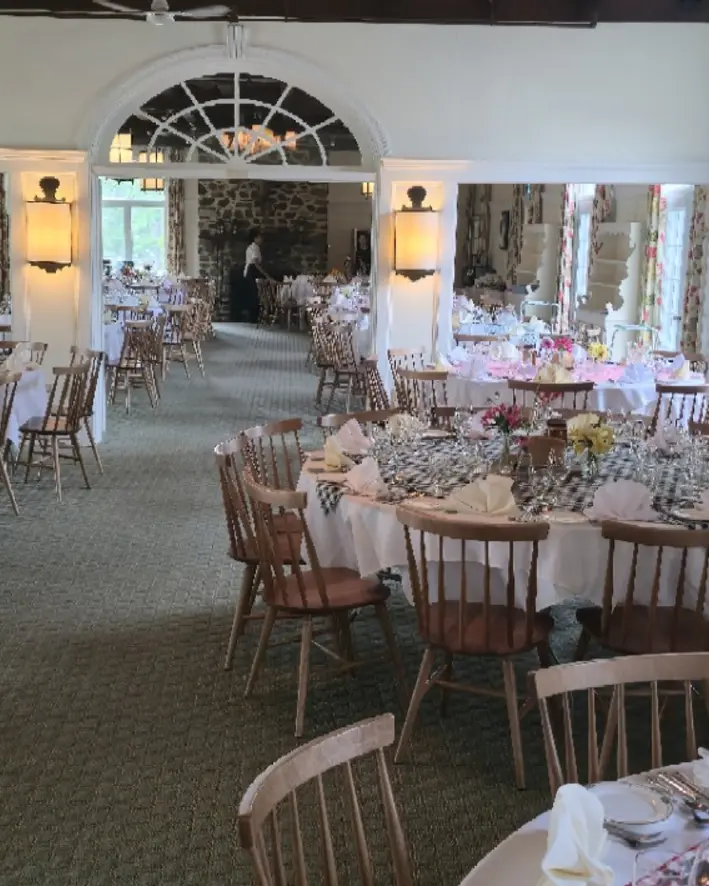
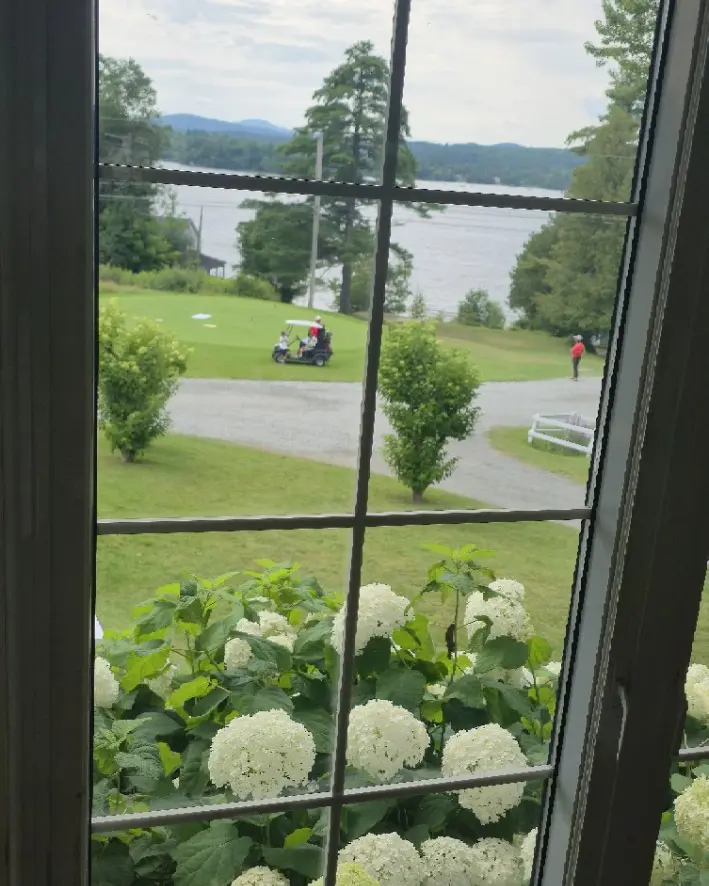
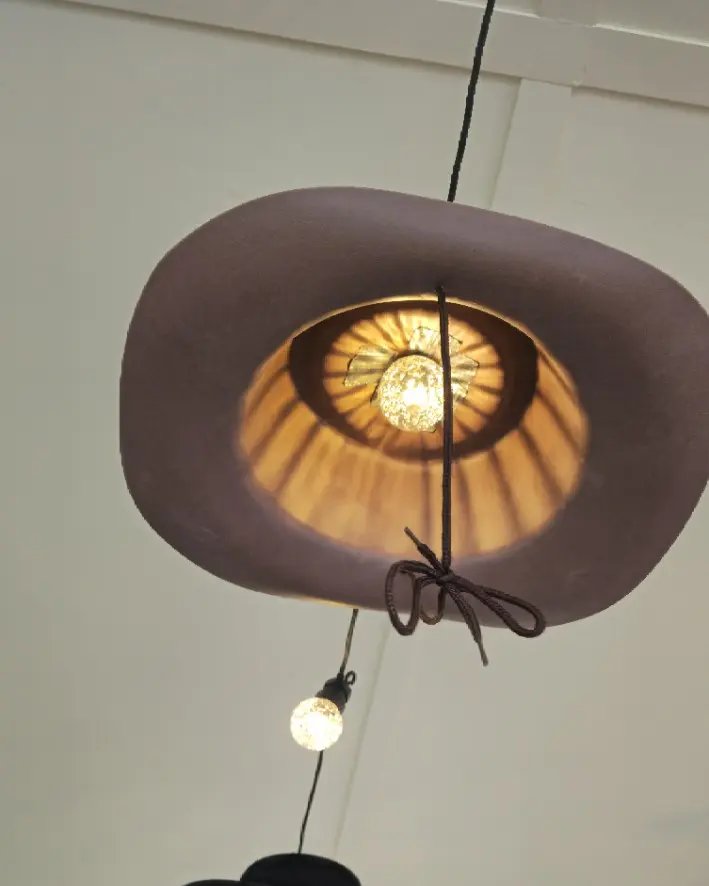
Today, August 1, 2026, the Hermitage Club in Magog went Western. Red and navy bandanas crossed the pale beams. Gingham tablecloths gave the dining room a sharper rhythm. Cowboy hats hovered around exposed bulbs, turning the lighting into part of the event. Through the windows, Lake Memphremagog stayed calm beneath the green line of the Eastern Townships.
The contrast made the room work: playful details inside a lakeside clubhouse of white-painted wood and stone, framed by flowers and long views. Paul Lizzi did not need to turn that setting into a musical costume. The stronger move was to read its temperature—warm, social and celebratory—and bring a live setup flexible enough to belong there.
A club with roots going back to 1912
The Hermitage Club's official history begins in 1912. Its current site places the club on Lake Memphremagog, while a 2026 PGA of Canada posting describes the Magog property as a nine-hole golf club with lakeside clubhouse spaces. The City of Magog's built-heritage inventory also records the Hermitage Club at 200-31 rue de l'Hermitage.
Those verified details matter because the place is not a generic country-club backdrop. The club's roots reach back more than a century, while Magog's inventory records the clubhouse as a separate heritage building. The photographs hold that character without overstating it: old materials, an open view and a room temporarily transformed for one Western-themed gathering.
The setup tells the story
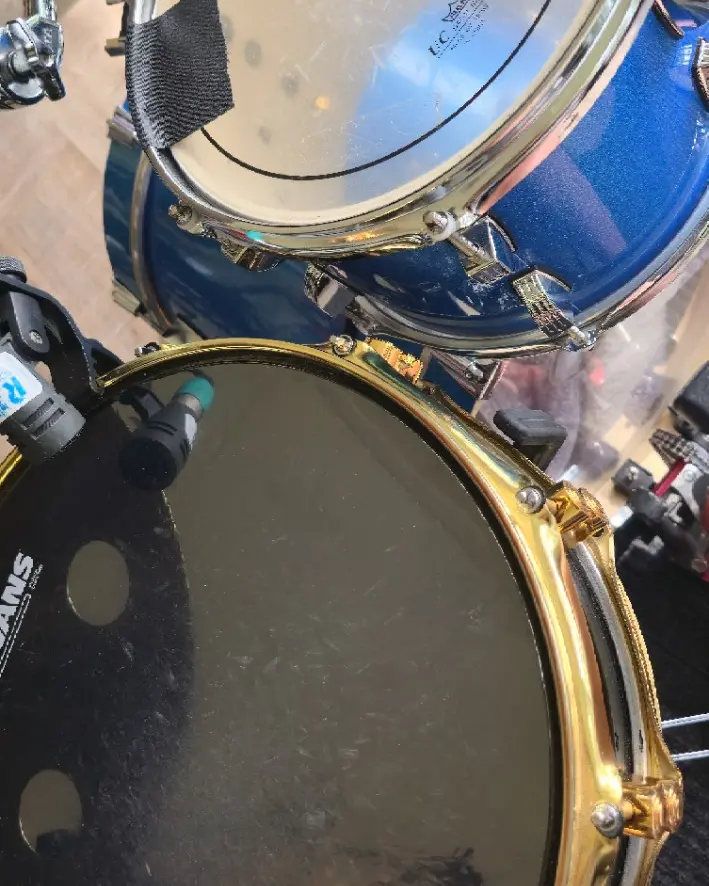
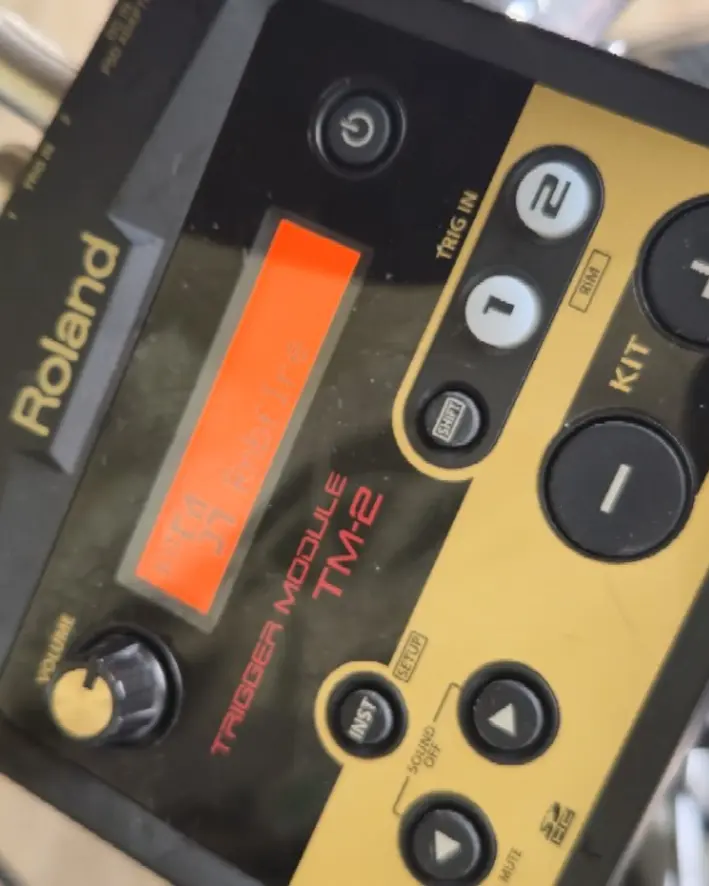
In close-up, the musical language becomes clear. A compact blue-and-gold drum setup is close-miked for definition. Beside the sticks and cables sits a Roland TM-2 trigger module, ready to add an electronic layer to the acoustic strike. Skin, metal and circuitry occupy the same small footprint.
That balance is central to the way Paul performs. The drums make movement visible and give the room an immediate pulse. The electronics widen the palette without replacing the player. One is tactile; the other is precise. Together they make space for the performance to adjust to the scale, acoustics and pace of the event.
DRUM LUVIN' still explains the foundation
Today's archive tape is the official DRUM LUVIN' video, published on Paul Lizzi's YouTube channel on July 17, 2010. It is not footage from the Hermitage Club. It is context: the early statement that put the drummer in front and made rhythm part of the artist image rather than equipment hidden behind it.
M.O.T.H. (Man Of The Hour) belongs beside it as another classic chapter. The scale and styling have changed since those releases, but the live logic remains visible at Hermitage: build the performance from the body outward, then use production and technology to sharpen what the room already feels.
Adaptability is part of the identity
Paul does not arrive as only a drummer, singer or producer. Each role changes how he listens. The drummer hears the pocket. The singer understands phrasing and breath. The producer hears transitions, texture and the architecture surrounding the performance. Adaptability is not a departure from identity; it is evidence of how much identity is already there.
That is why the Western theme can remain visual while the music stays unmistakably Paul Lizzi. The room supplies the world. The setup supplies options. The artist decides how much energy to release and how much negative space to leave around it.
From Magog back into Z11VFY
The line continues through five records—MultiVerse, Vici, First$$$, Oscura and the current Z11VFY chapter. Hermitage adds another location to that living map: a lakeside club in Magog, a Western room and a performance shaped for the people inside it rather than for a generic stage.
Next, the signal moves to Le Fou Fou inside Royalmount every Thursday in August from 6 to 9 p.m., beginning August 6. Different room, different pace, same principle: Paul Lizzi becomes LIZZIFY and LIZZIFY becomes Z11VFY without losing the drummer who started the motion.